
Hair Loss, Hormones & Weight Loss: Could PRP and Exosomes Help Restore Your Hair?
ASPIRE CLINIC | HAIR HEALTH & REGENERATIVE AESTHETICS
Have you noticed more hair collecting in your hairbrush? Perhaps your ponytail feels thinner, your parting looks wider, or your hair simply doesn’t have the fullness it once did.
Hair loss can happen at any stage of life, and it can be particularly frustrating when it follows a positive lifestyle change, such as losing weight or taking steps to improve your health.
At Aspire Clinic, we understand that hair is about more than appearance. For many people, it is closely connected to confidence, identity and feeling like themselves.
The good news is that understanding why your hair is thinning is the first step towards finding the right solution.
With growing interest in treatments such as Platelet-Rich Plasma (PRP) and exosomes, there are new possibilities to explore in hair and scalp care.
But what causes hair loss, how do these treatments work, and who might benefit?
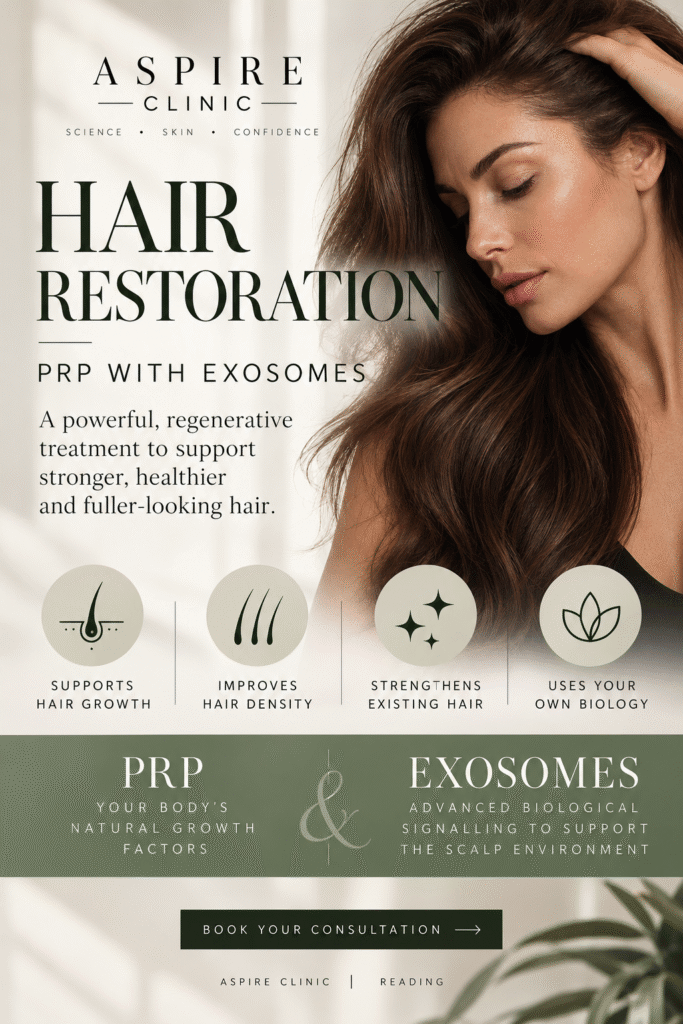
Hair loss can affect both men and women at different stages of life. Whether you’re noticing increased shedding, thinning around your hairline or a loss of overall volume, understanding the underlying cause is the first step towards healthier-looking hair.
At Aspire Clinic, we offer personalised hair restoration consultations, including Platelet-Rich Plasma (PRP) therapy and discussions about emerging treatments such as exosomes.
Why does hair loss happen?
Hair thinning can be triggered by several factors, including:
- Menopause and perimenopause: Hormonal changes, particularly declining oestrogen levels, can contribute to thinner, finer hair.
- GLP-1 weight loss medications: Treatments such as Mounjaro and Wegovy may be associated with increased hair shedding, often linked to rapid weight loss rather than a proven direct effect of the medication.
- Rapid weight loss: Significant calorie restriction, insufficient protein and nutritional deficiencies can disrupt the normal hair growth cycle.
- Stress and illness: Physical or emotional stress can trigger temporary excessive shedding, known as telogen effluvium.
- Genetics and ageing: Hereditary hair loss is one of the most common causes of gradual thinning.
- Nutritional or medical factors: Low iron, thyroid conditions and other health issues can affect hair growth.
Identifying the cause is essential, as not all types of hair loss respond to the same treatments.
What is PRP hair restoration?
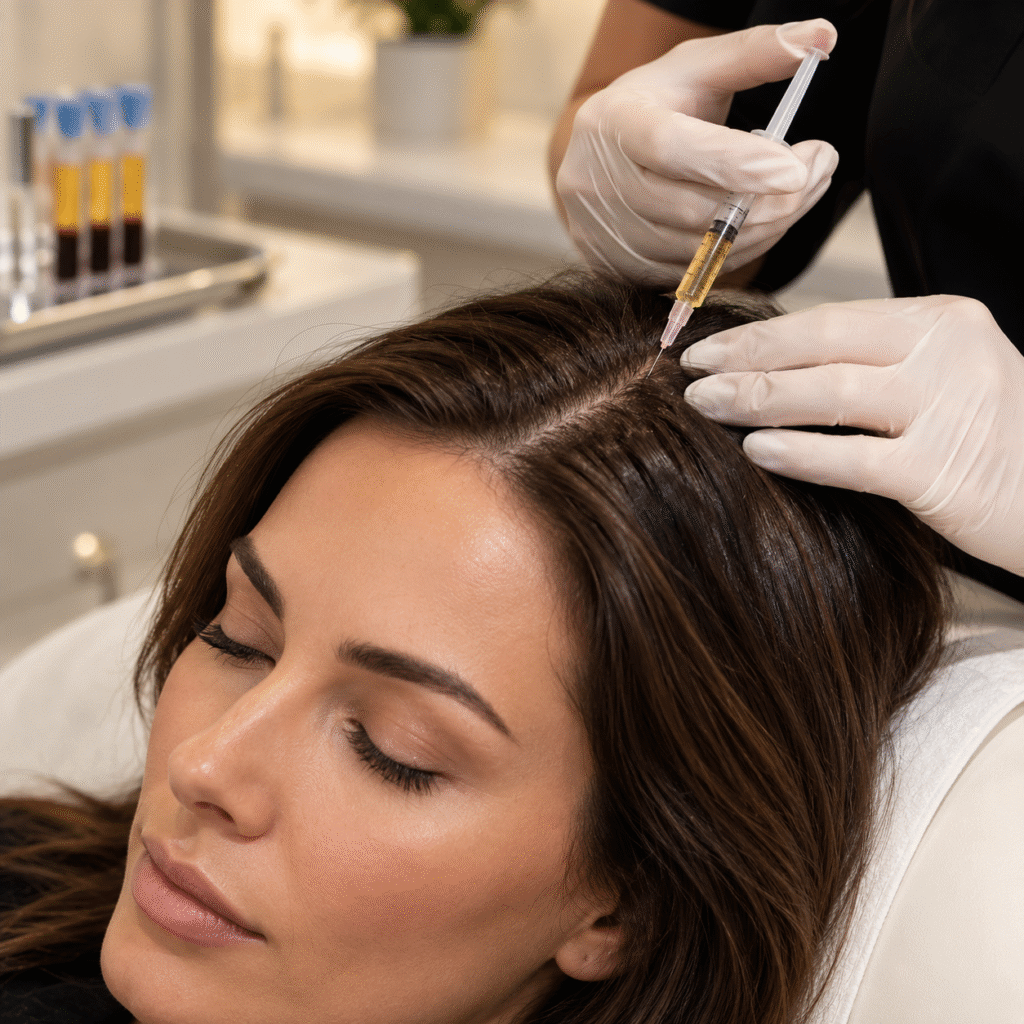
PRP (Platelet-Rich Plasma) uses a small sample of your own blood, which is processed to concentrate platelets and their naturally occurring growth factors.
The PRP is then administered into targeted areas of the scalp to support hair follicle activity.
Research suggests PRP may help improve hair density and thickness in some patients, particularly those experiencing pattern hair loss.
What about exosomes?
Exosomes are tiny extracellular vesicles that carry signals between cells. They are attracting interest in regenerative aesthetics because of their potential role in cellular communication and tissue repair.
Exosome-based products are being investigated for hair restoration and may be discussed alongside PRP.
However, exosome treatments remain experimental for hair restoration, and there is currently insufficient clinical evidence to confirm that combining them with PRP improves results or accelerates hair growth.
When can you expect results?
Hair restoration is a gradual process. Some patients receiving PRP may begin to notice improvements in hair density over approximately 3–6 months, although results vary.
Treatment suitability depends on the cause of hair loss, the health of existing follicles and individual circumstances.
Your hair restoration journey at Aspire Clinic
Whether your hair thinning is linked to menopause, GLP-1 medication, significant weight loss, stress or genetics, a personalised assessment can help identify the most appropriate next steps.
PRP may offer a non-surgical option for suitable patients, while other causes of hair loss may require nutritional, hormonal or medical investigation first.
Ready to take the first step towards healthier-looking hair?
Book your hair restoration consultation at Aspire Clinic to explore your options and create a personalised treatment plan.
Please note: PRP results are not guaranteed. Exosome-based hair restoration is still under investigation, and any proposed product or application must meet applicable regulatory requirements.